

Car Loan Balance
Managing an existing car loan can become easier when you understand the options available for reducing borrowing costs or accessing additional funds. Two common options are a car loan balance transfer and a car loan top-up loan. Although both can help borrowers manage their finances, they serve different purposes.
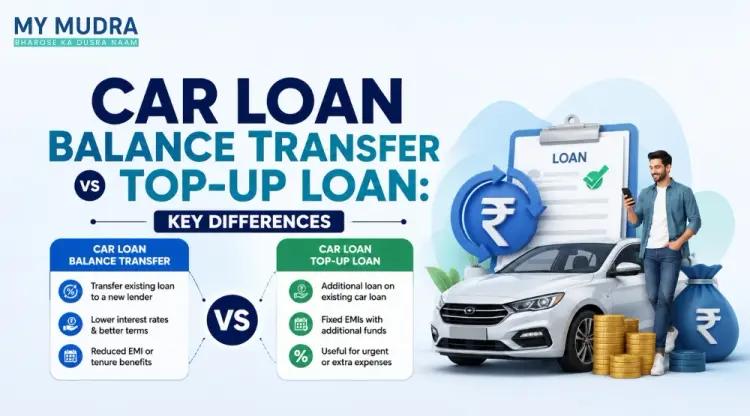
A car loan balance transfer involves moving your outstanding car loan from one lender to another, usually to benefit from a potentially lower interest rate or better repayment terms. A car loan top-up loan, on the other hand, allows an eligible borrower to access additional funds over and above an existing car loan, subject to the lender’s terms.
Understanding the differences between a car loan balance transfer vs top-up loan can help you choose an option that matches your financial requirements.
What Is a Car Loan Balance Transfer?
A car loan balance transfer is the process of transferring the outstanding balance of your existing car loan to another lender. The new lender typically settles the outstanding amount with the existing lender, and you then repay the new lender according to the revised loan agreement.
Borrowers generally consider a balance transfer when they find potentially better interest rates, repayment flexibility, or service terms with another lender.
For example, if you have been repaying a car loan for several years and another lender offers a lower interest rate, transferring the outstanding balance may reduce the interest burden, depending on the remaining tenure, fees, and other terms.
Benefits of Car Loan Balance Transfer
Some potential benefits include:
Possibility of a lower interest rate: A lower rate may reduce the overall interest payable.
Potential EMI savings: Depending on the outstanding principal and remaining tenure, your monthly EMI may decrease.
Flexible repayment options: Some lenders may offer different tenure or repayment structures.
Better service: Borrowers may consider switching if another lender provides more convenient services.
Opportunity to restructure repayment: A transfer may allow you to choose a repayment period that better suits your current financial situation.
However, borrowers should compare processing fees, foreclosure or transfer-related charges, documentation costs, and the total interest payable before switching lenders.
What Is a Car Loan Top-Up Loan?
A car loan top-up loan provides additional funds to an existing borrower, subject to the lender's eligibility criteria. Instead of taking an entirely separate loan, the borrower may receive additional financing against the existing loan relationship.
The additional amount can potentially be used for various legitimate financial requirements, depending on the lender's policies. Eligibility may depend on factors such as repayment history, outstanding loan amount, income, credit profile, vehicle details, and the lender's internal policies.
Benefits of a Car Loan Top-Up Loan
A car loan top-up loan may offer the following advantages:
Access to additional funds: It can provide extra financing without applying for an entirely different type of loan.
Simplified borrowing: Existing customers may have a relatively streamlined application process, subject to lender policies.
Convenient repayment: The additional borrowing may be incorporated into the lender's repayment structure.
Useful for short-term financial needs: It may provide additional liquidity when required.
Potentially convenient documentation: Existing borrowers may already have their details and repayment history with the lender.
The actual interest rate, loan amount, tenure, fees, and permitted use of funds vary between lenders.
Car Loan Balance Transfer vs Top-Up Loan: Key Differences
Feature | Car Loan Balance Transfer | Car Loan Top-Up Loan |
|---|---|---|
Primary purpose | Transfer an existing loan to another lender | Obtain additional funds |
Existing loan | Transferred to a new lender | Usually continues with the existing lender |
Main objective | Potentially reduce borrowing cost or improve terms | Meet additional funding requirements |
Interest rate | Depends on the new lender | Depends on the lender and borrower profile |
Additional funds | May not necessarily provide extra funds | Designed to provide additional financing |
Eligibility | Based on credit profile, repayment history and lender criteria | Based on existing loan relationship and eligibility criteria |
Charges | May include processing and transfer-related charges | May include processing or other applicable charges |
Best suited for | Borrowers seeking improved loan terms | Borrowers who need additional funds |
Which Option Should You Choose?
The right option depends on your financial objective.
If your primary goal is to reduce the interest rate or improve the terms of your existing car loan, a car loan balance transfer may be worth considering. Before transferring, calculate the expected interest savings and deduct all applicable charges. A lower interest rate does not automatically mean a lower total borrowing cost if substantial fees are involved.
If you already have a car loan and need additional funds, a car loan top-up loan may be more relevant. However, adding more debt increases your overall repayment obligation, so it is important to assess whether the additional EMI fits comfortably within your budget.
Factors to Consider Before Making a Decision
When comparing a car loan balance transfer vs top-up loan, consider these factors:
1. Interest Rate
Compare the interest rate offered under each option. Even a small difference can affect the total interest payable over the remaining tenure.
2. Processing and Other Charges
Check processing fees, documentation charges, foreclosure or prepayment charges, and any other applicable costs.
3. Remaining Loan Tenure
If only a short period remains on your existing loan, transferring the loan may provide limited savings. Calculate the actual benefit before making a decision.
4. Total Repayment Cost
Do not compare options solely on EMI. Consider the total principal, interest, fees, and other applicable charges.
5. Credit Profile
Your credit score, income, repayment history, and other eligibility factors can influence the terms offered by a lender.
6. Repayment Capacity
Before taking additional borrowing, review your monthly income, existing EMIs, regular expenses, and financial goals. Avoid choosing an option that creates an excessive repayment burden.
Final Thoughts
The choice between a car loan balance transfer and a car loan top-up loan depends mainly on your financial objective. A balance transfer focuses on moving an existing loan to potentially obtain better terms, while a top-up loan focuses on accessing additional funds.
Before making a decision, compare interest rates, processing charges, remaining tenure, total repayment costs, eligibility requirements, and your repayment capacity. Using these factors to evaluate the car loan balance transfer vs top-up loan can help you select a financing option that aligns with your current financial needs.