

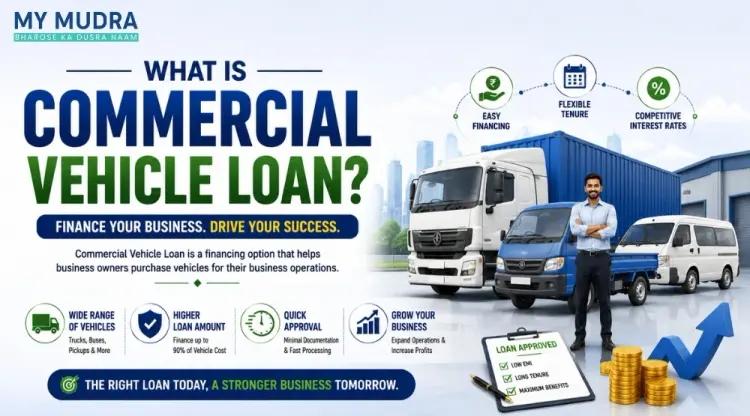
Commercial Vehicle Loan
If you are planning to purchase a vehicle for business or commercial purposes, arranging the required funds can be a major consideration. A commercial vehicle loan is a financing option that can help eligible individuals and businesses purchase vehicles used for income-generating activities. These may include trucks, buses, taxis, vans, tempos, and other eligible commercial vehicles.
Understanding what is commercial vehicle loan, its eligibility criteria, documents, interest rates, repayment terms, and application process can help borrowers make informed borrowing decisions.
What Is a Commercial Vehicle Loan?
A commercial vehicle loan is a type of vehicle financing designed to help borrowers purchase vehicles for commercial or business use. Instead of paying the entire purchase price upfront, the borrower obtains financing from a lender and repays the borrowed amount through regular instalments over an agreed tenure.
The commercial vehicle loan meaning can vary slightly between lenders depending on their product terms, but generally, the financing is intended for vehicles used to generate income. For example, a transport operator may use a loan to purchase a truck, while a self-employed driver may finance a taxi or passenger vehicle.
The financed vehicle may serve as security for the loan, subject to the lender's terms and applicable regulations.
Types of Commercial Vehicles That Can Be Financed
The type of vehicle eligible for financing depends on the lender and loan scheme. Common examples may include:
Trucks and heavy commercial vehicles
Light commercial vehicles
Mini trucks and tempos
Buses and passenger vehicles
Taxis and commercial cars
Vans used for business purposes
Special-purpose commercial vehicles
Construction or goods-transport vehicles
Borrowers should confirm the lender's eligible vehicle categories before submitting an application.
Who Can Apply for a Commercial Vehicle Loan?
A commercial vehicle loan may be available to different categories of borrowers, depending on the lender's eligibility requirements. These can include:
Self-employed individuals
Transport operators
Small business owners
Fleet owners
Proprietorships and partnerships
Companies
Existing commercial vehicle owners looking to expand their fleet
Lenders generally assess factors such as the applicant's income, business experience, repayment capacity, credit profile, existing obligations, and the proposed vehicle's purpose.
How Does a Commercial Vehicle Loan Work?
The process is generally straightforward. First, the borrower selects an eligible commercial vehicle and applies for financing with a lender. The lender evaluates the applicant's financial and business profile along with the vehicle details.
If the application is approved, the lender sanctions the loan according to its applicable terms. The borrower may need to contribute a portion of the vehicle's cost as a down payment, while the lender finances the remaining eligible amount.
After disbursement, the borrower repays the loan through EMIs over the agreed tenure. The monthly EMI generally consists of principal and interest components.
Commercial Vehicle Loan Eligibility
Eligibility criteria vary between lenders. However, applicants may commonly need to meet requirements related to:
Minimum age
Indian residency or applicable legal status
Stable income or business activity
Minimum business or driving experience, where applicable
Acceptable credit history
Adequate repayment capacity
Ownership or operation of an eligible commercial activity
For business borrowers, lenders may also consider turnover, banking history, financial statements, and existing liabilities.
Meeting the basic eligibility requirements does not guarantee loan approval because the final decision depends on the lender's credit assessment.
Documents Required
The documents required for a commercial vehicle loan can vary depending on the borrower and lender. Commonly requested documents may include:
Identity and address proof
PAN and applicable KYC documents
Passport-size photographs
Bank account statements
Income proof
Income-tax returns, where applicable
Business registration documents
Financial statements for eligible businesses
Vehicle quotation or proforma invoice
Commercial vehicle-related documents
Additional documents may be requested depending on the applicant's profile and loan amount.
Interest Rates and Charges
The interest rate on a commercial vehicle loan depends on several factors, including the borrower's credit profile, income, business stability, vehicle type, loan amount, tenure, and lender's policies.
Apart from interest, borrowers should check other applicable charges before accepting an offer. These may include processing fees, documentation charges, foreclosure or prepayment charges where applicable, late-payment charges, and other service-related fees.
Borrowers should compare the overall cost of borrowing rather than looking only at the advertised interest rate.
Benefits of a Commercial Vehicle Loan
Financing a commercial vehicle can offer several practical benefits:
Preserves working capital: Instead of using all available business funds to purchase a vehicle, financing may allow the borrower to retain money for fuel, salaries, maintenance, inventory, or other operating expenses.
Supports business expansion: Additional vehicles can help transport operators increase capacity and potentially serve more customers.
Structured repayment: EMIs provide a predictable repayment schedule, which can help borrowers plan their cash flow.
Access to newer vehicles: Financing can make it easier to acquire a new or eligible used commercial vehicle, depending on the lender's policy.
How to Apply for a Commercial Vehicle Loan
Applicants can generally follow these steps:
Determine the type and cost of the commercial vehicle required.
Check eligibility requirements with potential lenders.
Compare interest rates, tenure, fees, and other terms.
Prepare the required KYC, income, and business documents.
Submit the loan application.
Allow the lender to complete its verification and credit assessment.
Review the sanction terms carefully if approved.
Complete the required documentation and formalities.
Receive disbursement according to the lender's process.
Things to Consider Before Borrowing
Before taking a commercial vehicle loan, borrowers should estimate the vehicle's expected income and operating costs. Expenses such as fuel, insurance, maintenance, permits, taxes, driver salaries, and repairs can affect the amount available for EMI repayment.
It is also important to choose a loan tenure that fits the business's expected cash flow. A longer tenure may reduce the EMI but can increase the total interest paid over the loan period. Borrowers should also understand the lender's conditions regarding prepayment, late payments, insurance, and vehicle usage.
Conclusion
Understanding what is commercial vehicle loan is important for anyone planning to finance a vehicle for business use. A commercial vehicle loan can provide access to funding for eligible trucks, buses, taxis, vans, and other commercial vehicles while allowing borrowers to repay the amount through structured instalments.
The commercial vehicle loan meaning goes beyond simply financing a vehicle—it involves assessing affordability, business cash flow, eligibility, interest costs, fees, and repayment obligations. Before applying, borrowers should compare available loan terms, calculate their repayment capacity, read the loan agreement carefully, and select financing that aligns with their business requirements.