

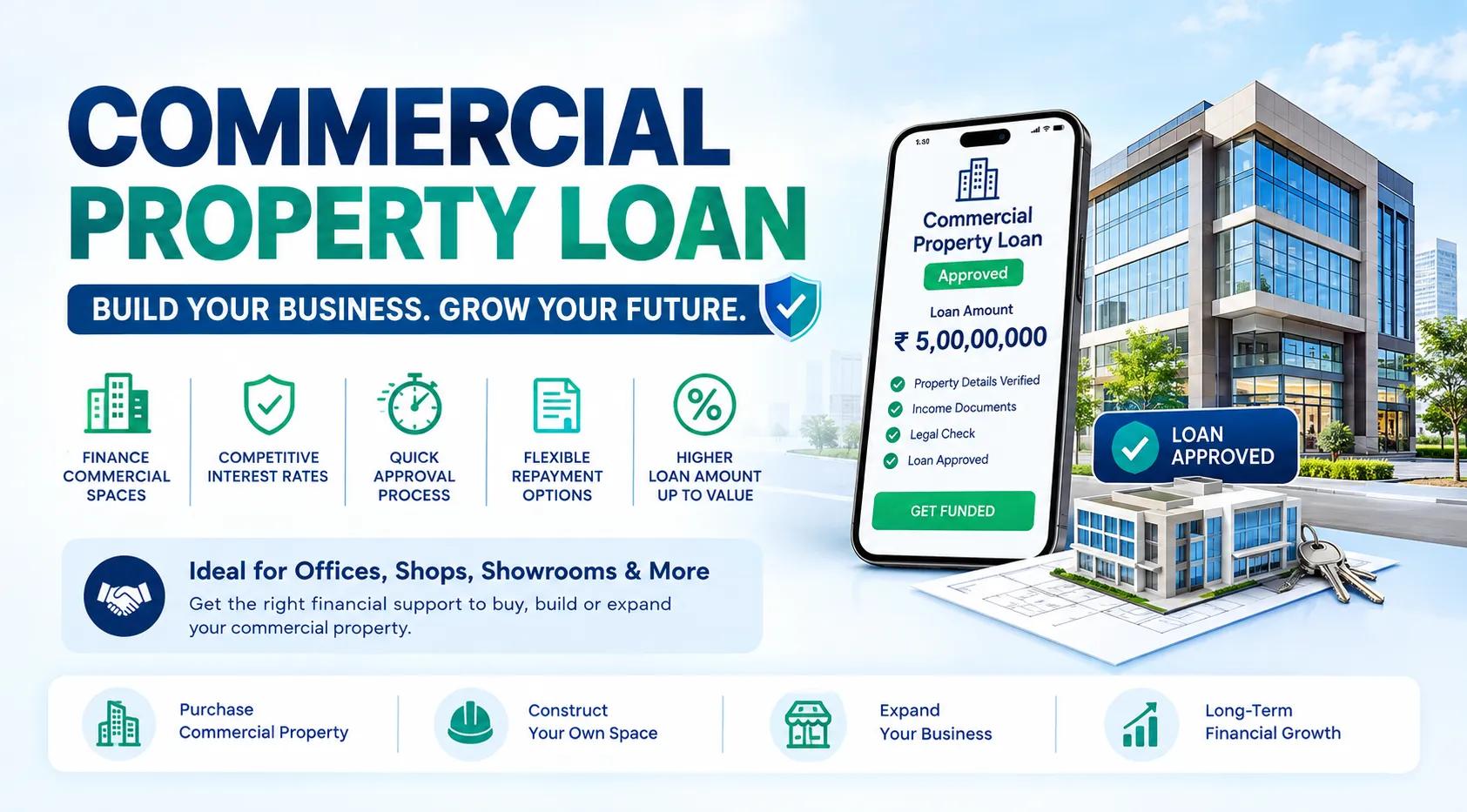
A commercial property loan is a useful financing option for business owners, entrepreneurs, investors, and self-employed professionals who want to purchase, construct, or expand commercial spaces. Whether you plan to buy an office, retail shop, showroom, warehouse, or business premises, this loan can help you arrange the required funds without using all your savings. Understanding the benefits of a commercial property loan can help you make an informed financial decision and choose suitable financing for your business needs.
Today, many lenders offer convenient application processes, flexible repayment options, and competitive interest rates, depending on the borrower's eligibility. With digital services, borrowers can also apply for commercial property loan facilities online and compare different lending options before making a decision.
What Is a Commercial Property Loan?
A commercial property loan is a type of financing designed to help individuals and businesses purchase, construct, or sometimes renovate commercial real estate. Eligible properties may include offices, shops, commercial buildings, industrial units, and warehouses, subject to the lender's policies.
The loan amount, interest rate, repayment tenure, and eligibility criteria generally depend on factors such as income, credit score, property value, existing financial obligations, and repayment capacity. Before applying, borrowers should review the lender's terms, processing fees, property requirements, and other applicable charges.
Top 10 Benefits of Taking a Commercial Property Loan
1. Purchase Commercial Property Without Paying the Full Amount Upfront
One of the main benefits of a commercial property loan is that it allows borrowers to purchase business property without paying the entire cost from their savings. Instead, the borrower contributes a down payment, while the lender finances an eligible portion of the property value.
This arrangement can help business owners acquire offices, shops, or warehouses while retaining some funds for working capital, inventory, employee salaries, and daily operating expenses. However, the required down payment varies according to the lender's policies and the property's valuation.
2. Helps Expand Your Business
Business expansion often requires additional space for operations, employees, storage, or customer services. A commercial property loan can help businesses acquire larger premises or establish a presence in a new location.
For example, a retailer planning to open another showroom may use this financing to purchase suitable commercial premises. Owning the property can provide greater control over the business location and reduce dependence on rental arrangements, although ownership also involves maintenance and other property-related expenses.
3. Flexible Repayment Options
Many lenders provide different repayment tenures based on their loan products and the borrower's eligibility. A suitable tenure can help borrowers structure their monthly instalments according to their financial capacity.
Before you apply for commercial property loan financing, compare repayment periods, interest rates, and monthly EMI obligations. A longer tenure may reduce the monthly EMI but can increase the total interest paid over the loan period. Selecting a manageable repayment schedule is important for maintaining healthy business cash flow.
4. Potential to Build Long-Term Asset Ownership
Purchasing commercial real estate can help borrowers build ownership of a valuable asset over time. Unlike renting, where payments generally do not create ownership, loan repayments contribute towards paying off the outstanding property debt.
The property's market value may appreciate over the years, depending on location, infrastructure development, market demand, and economic conditions. However, property prices can also decline, and appreciation is never guaranteed. Borrowers should assess the property's location, legal status, and long-term suitability before making a purchase.
5. Preserves Working Capital
Using all available savings to purchase a commercial property can leave a business with limited funds for regular operations. Financing through a loan allows borrowers to spread the property cost over time, subject to the required down payment and other expenses.
This can help businesses retain funds for marketing, technology upgrades, inventory, recruitment, and unexpected costs. However, borrowers should ensure that the proposed EMI remains affordable even during periods of lower revenue.
6. Convenient Online Application Process
Digital lending services have made it easier to explore financing options without visiting multiple branches. Borrowers can apply for commercial property loan online through eligible lenders' websites, review basic eligibility criteria, and submit the required information digitally.
Depending on the lender, the process may include an online application form, income verification, credit assessment, property valuation, and document submission. Online applications can save time, but approval is not guaranteed and may require further verification or an in-person property inspection.
7. Suitable for Different Business Requirements
A commercial property loan may support several property-related business needs, depending on the lender's product terms. These may include purchasing an office, acquiring a retail outlet, buying a showroom, or financing eligible commercial premises.
For instance, a manufacturing business may need a warehouse, while a professional firm may require an office space. Borrowers should confirm whether their intended property type and transaction are eligible before submitting an application.
8. Potential Tax Benefits
Commercial property financing may offer tax-related benefits in certain circumstances. Eligible businesses may be able to claim interest expenses as business deductions when the relevant tax rules and conditions are satisfied. Property owners earning rental income may also qualify for specific deductions under applicable income tax provisions.
Tax treatment depends on factors such as property usage, ownership structure, accounting treatment, and the taxpayer's circumstances. Principal repayments do not automatically qualify for a tax deduction on every commercial property loan. Consult a qualified tax professional to understand the benefits available under current Indian tax laws.
9. Helps Establish Business Stability
Owning a commercial property can provide greater stability for businesses that need a consistent operating location. It may reduce uncertainty associated with lease renewals, rent increases, and landlord decisions.
A permanent business address can also support long-term planning, customer accessibility, and operational continuity. Nevertheless, property ownership comes with responsibilities such as maintenance, insurance where appropriate, property taxes, and loan repayment commitments.
10. Opportunity to Earn Rental Income
A commercial property purchased through financing may generate rental income if the owner leases it to another business. Offices, shops, and warehouses in suitable locations can attract tenants, depending on market conditions and property demand.
Rental income may help cover part of the monthly EMI and other property expenses. However, borrowers should account for vacancies, tenant defaults, maintenance costs, and periods when the property generates no income. Loan repayments remain the borrower's responsibility regardless of rental performance.
Eligibility Criteria for a Commercial Property Loan
Eligibility requirements vary by lender, but applicants may generally need to meet the following conditions:
Be an eligible Indian resident or business applicant under the lender's policies.
Meet the lender's minimum age requirements.
Demonstrate a stable income or sufficient business cash flow.
Maintain a satisfactory credit history and repayment record.
Provide acceptable property documents for legal and technical verification.
Submit proof of identity, address, income, and business ownership, where applicable.
Common documents include PAN, Aadhaar or other accepted identity documents, bank statements, income tax returns, financial statements, and property-related papers. The exact requirements depend on the applicant's profile and the lender.
How to Apply for a Commercial Property Loan Online
The process to apply for commercial property loan online generally involves a few straightforward steps:
Compare lenders: Review interest rates, processing fees, repayment tenures, and loan-to-value requirements.
Check eligibility: Assess your income, credit score, existing liabilities, and property details.
Complete the application: Enter the requested personal, business, and property information.
Upload documents: Submit the required identity, financial, and property documents.
Complete verification: The lender may assess your creditworthiness and arrange a property valuation.
Review the offer: Carefully read the sanction terms, interest rate, EMI schedule, and applicable charges before accepting.
Complete disbursement formalities: Funds are released according to the lender's approval and documentation requirements.
Conclusion
A commercial property loan can help business owners purchase premises, expand operations, preserve working capital, and build long-term property ownership. Additional advantages may include flexible repayment options, convenient online applications, and potential rental income. However, borrowers should evaluate the total borrowing cost, down payment, property risks, and repayment capacity before committing.
If you plan to apply for commercial property loan financing, compare available offers carefully and choose a loan that aligns with your business objectives and financial position. A well-planned borrowing decision can support sustainable growth while helping you manage your financial obligations responsibly.