

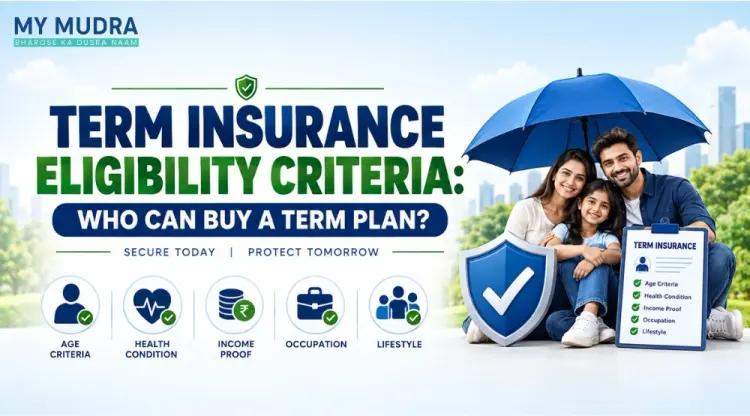
Term Insurance Eligibility Criteria
Term insurance is a straightforward life insurance product that provides financial protection to the policyholder’s family in the event of their death during the policy term. Before purchasing a policy, applicants need to meet certain term insurance eligibility criteria set by the insurer. These criteria generally depend on factors such as age, income, occupation, health condition, lifestyle, and the documents submitted during the application process.
Understanding term insurance eligibility can help applicants choose a suitable policy, prepare the required documents, and avoid delays during underwriting. While eligibility requirements vary between insurers and policies, some common conditions apply to most term insurance plans in India.
What Is Term Insurance Eligibility?
Term insurance eligibility refers to the conditions an applicant must satisfy to qualify for a term insurance policy. Insurers evaluate an applicant’s financial profile, age, health, lifestyle, and other relevant factors before deciding whether to issue the policy.
The eligibility criteria for term insurance may differ depending on the insurer, sum assured, policy duration, occupation, and the applicant’s medical history. Meeting the basic eligibility requirements does not automatically guarantee policy issuance, as the insurer may conduct additional underwriting based on the information provided.
1. Age Criteria for Term Insurance
Age is one of the primary factors considered when determining term insurance eligibility. Most insurers allow individuals to purchase term insurance once they reach adulthood, generally from 18 years of age.
The maximum entry age varies across insurance companies and plans. Some policies may permit entry at an older age, although the available policy term and coverage options can become more limited.
Younger applicants may have access to longer policy terms and may qualify for comparatively lower premiums because age is an important factor in life insurance pricing. Purchasing coverage earlier can therefore help individuals obtain long-term financial protection.
Before applying, check the insurer’s minimum and maximum entry age and the maximum maturity age applicable to the specific policy.
2. Income and Financial Eligibility
Income is another important consideration when evaluating the eligibility criteria for term insurance. Insurers generally assess the applicant’s income to determine an appropriate level of life cover.
Income verification helps insurers establish whether the requested sum assured is reasonably aligned with the applicant’s financial profile. Depending on the applicant’s employment status, income documents may include salary slips, bank statements, income-tax returns, Form 16, or business-related financial records.
Salaried individuals may be asked to provide recent salary slips and bank statements, while self-employed applicants may need to submit income-tax returns, audited financial statements, or other proof of earnings.
There is no single income amount that makes everyone eligible for term insurance. The required income level can vary according to the insurer, coverage amount, age, occupation, and other underwriting factors.
3. Health and Medical Requirements
Health assessment is an important part of term insurance eligibility criteria. Insurers may ask applicants to disclose existing medical conditions, previous treatments, surgeries, medications, and family medical history.
Depending on factors such as age, coverage amount, health declarations, and underwriting requirements, the insurer may require medical examinations or diagnostic tests.
Applicants should provide accurate information about their health and lifestyle. Hiding relevant medical information can create complications during claim assessment.
Health-related factors that may be considered include:
Existing or previous medical conditions
Smoking or tobacco consumption
Alcohol consumption
Previous surgeries or hospitalisation
Current medications
Family medical history
Height, weight, and other health parameters
The insurer may use this information to determine whether additional underwriting requirements, premium adjustments, exclusions, or other terms apply.
4. Occupation and Lifestyle
Occupation can also influence term insurance eligibility. Applicants working in high-risk occupations may undergo additional underwriting compared with individuals employed in lower-risk professions.
Similarly, lifestyle habits such as smoking or tobacco use can affect premium calculations and underwriting decisions. Applicants should disclose these details honestly while completing the proposal form.
Insurers may ask for information about the applicant’s occupation, work environment, travel patterns, and other relevant risk factors, particularly for higher coverage amounts.
5. Nationality and Residency
Insurers may have specific eligibility conditions for Indian residents, Non-Resident Indians (NRIs), and other categories of applicants. The exact requirements can vary by insurer and policy.
NRIs may be eligible for certain term insurance plans in India, subject to the insurer’s applicable rules, documentation, residency status, and underwriting requirements.
Applicants should check the specific policy terms before purchasing coverage.
6. Documents Required for Term Insurance
Providing the correct documents is an important part of meeting term insurance eligibility requirements and completing the application process.
Commonly requested documents may include:
Identity Proof
Applicants may be required to provide an accepted identity document, such as a PAN card, Aadhaar, passport, voter ID, or driving licence, depending on the insurer’s requirements.
Address Proof
Documents such as Aadhaar, passport, utility bills, or other accepted address documents may be requested.
Age Proof
A valid document establishing the applicant’s date of birth may be required.
Income Proof
Depending on the applicant’s employment status, insurers may request salary slips, Form 16, income-tax returns, bank statements, or business income documents.
Medical Reports
If medical underwriting is required, the applicant may need to submit existing medical records or complete medical tests arranged by the insurer.
Passport-Size Photograph
A recent photograph may be required as part of the application and verification process.
The exact list of documents varies between insurers and policies, so applicants should refer to the insurer’s latest documentation requirements.
7. Why Meeting Eligibility Criteria Matters
Understanding the term insurance eligibility criteria before applying can make the purchasing process more efficient. It allows applicants to estimate the documentation they may need and understand the factors that can influence underwriting.
Applicants should also review the policy’s coverage amount, policy term, premium payment frequency, exclusions, and other terms before making a decision.
Importantly, all information provided in the proposal form should be accurate and complete. Incorrect or incomplete disclosures may create issues during policy servicing or claim assessment.
How to Check Your Term Insurance Eligibility
Applicants can generally check term insurance eligibility by visiting the insurer’s official website or contacting an authorised insurance representative. The process typically involves entering basic details such as age, gender, occupation, income, smoking status, and desired coverage.
The insurer may then determine the next steps, which can include document verification and medical underwriting. Eligibility and final policy terms are subject to the insurer’s underwriting guidelines.
Conclusion
Knowing the eligibility criteria for term insurance is an important step before purchasing life cover. Age, income, health, occupation, lifestyle, residency status, and documentation can all play a role in the application and underwriting process.
There is no universal eligibility formula because requirements vary between insurers and individual policies. Applicants should compare policy features, understand the applicable terms, provide accurate information, and keep the required documents ready. A clear understanding of term insurance eligibility criteria can help individuals approach the application process with better preparation and choose coverage that aligns with their financial protection needs.