

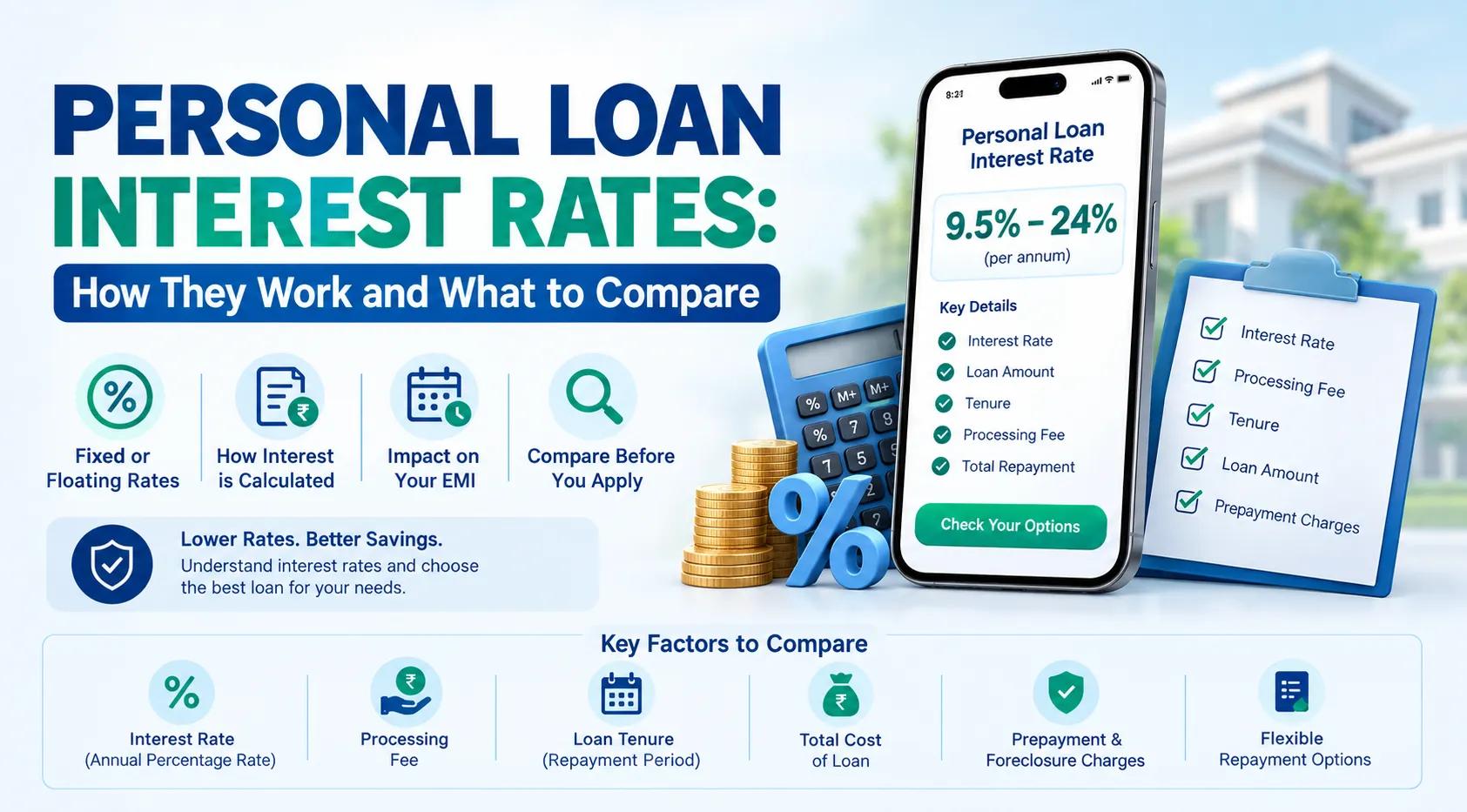
Choosing the right personal loan requires more than checking the lowest advertised interest rate. Borrowers should compare interest rates, processing fees, repayment terms, eligibility criteria, and other charges before making a decision. A careful comparison can help reduce borrowing costs and make monthly repayments more manageable.
Today, many lenders allow customers to apply for personal loan online, making it easier to compare loan offers and complete the application process from home. Understanding how interest rates work can help you select a suitable loan according to your income, credit score, and financial requirements.
1. Understand Different Types of Personal Loan Interest Rates
Before comparing loan offers, understand how lenders calculate interest. Personal loans generally come with fixed interest rates, although the exact terms depend on the lender and loan agreement.
Fixed interest rate: The interest rate remains unchanged throughout the agreed loan tenure, helping you plan your EMIs.
Floating interest rate: The interest rate may change according to the lender's applicable terms and benchmark movements.
Most personal loans are offered at fixed rates, but borrowers should always verify the applicable rate and repayment conditions. Do not select a loan based only on a promotional rate, as the final rate offered may depend on your credit profile and eligibility.
2. Compare Interest Rates Offered by Different Lenders
Different banks and financial institutions may offer different interest rates for similar loan amounts. Before choosing a lender, compare multiple offers instead of accepting the first approval you receive.
Check the following factors:
Starting and maximum advertised interest rates
Your personalised interest rate
Loan amount and repayment tenure
Processing fees and additional charges
Eligibility requirements and credit score criteria
For example, one lender may offer a lower interest rate but charge a higher processing fee. Another lender may provide a slightly higher rate with lower upfront costs. Comparing the complete cost of borrowing helps you make a more informed decision.
3. Check Your Credit Score Before Applying
Your credit score is an important factor that lenders may consider when determining your loan eligibility and interest rate. A strong credit history, timely repayments, and responsible credit utilisation may improve your chances of receiving competitive offers.
Before starting a personal loan application online, review your credit report for errors and check whether any outstanding payments need attention.
To improve your credit profile:
Pay existing EMIs and credit card bills on time.
Avoid submitting multiple loan applications within a short period.
Keep credit card balances manageable.
Review your credit report and dispute inaccurate information.
A higher credit score does not guarantee the lowest interest rate, because lenders also consider income, employment stability, existing liabilities, and their internal lending policies.
4. Calculate the Total Interest and EMI
A low interest rate is useful only when the overall repayment cost suits your budget. Calculate your monthly equated monthly instalment (EMI) and total interest payable before accepting a loan offer.
Your EMI generally depends on three factors: the principal amount, the interest rate, and the repayment tenure.
For example, if you borrow ₹2,00,000 for three years, your EMI will vary depending on the interest rate offered. A lower rate generally reduces the EMI and total interest payable when the loan amount and tenure remain unchanged.
However, extending the repayment period may reduce your monthly EMI while increasing the total interest paid over the loan's lifetime.
Use an online personal loan EMI calculator to compare different interest rates and tenures. This can help you identify a repayment plan that fits your monthly income.
5. Compare Processing Fees and Other Charges
Interest is not the only expense associated with borrowing. Some lenders charge processing fees, documentation charges, late-payment penalties, or foreclosure and part-prepayment charges, subject to their policies and applicable regulations.
Before choosing an instant personal loan online, carefully review the lender's schedule of charges.
Pay particular attention to:
Processing fees and applicable taxes
Late-payment and penal charges
Prepayment or foreclosure conditions
Loan cancellation terms, where applicable
Any other mandatory fees
Ask the lender for a clear breakdown of the amount disbursed and the total amount repayable. This helps you understand the actual cost of borrowing rather than focusing exclusively on the advertised interest rate.
6. Check the Repayment Tenure
Loan tenure affects both your EMI and total interest cost. A shorter tenure usually means higher monthly instalments but lower total interest, while a longer tenure generally reduces the EMI but can increase the overall borrowing cost.
Choose a tenure that allows you to repay comfortably without affecting essential expenses, savings, or other financial commitments.
Before finalising your loan, check whether the lender permits prepayment and understand the applicable conditions. Flexible repayment options may be useful if you expect your income to increase or anticipate having extra funds in the future.
7. Review the Lender's Credibility and Terms
When comparing loan offers, verify the lender's identity and regulatory status. If you borrow through a digital lending platform, check which bank or non-banking financial company (NBFC) actually provides the loan.
Read the Key Facts Statement (KFS), where applicable, and review the Annual Percentage Rate (APR). The APR provides a broader view of the annual borrowing cost by incorporating the interest rate and applicable charges as specified under the relevant rules.
Avoid lenders that promise guaranteed approval without proper eligibility checks or demand suspicious upfront payments. Review the loan agreement carefully before accepting the offer.
8. Complete Your Online Application Carefully
Once you have compared the available offers, select the loan that best matches your financial needs. When you apply for personal loan online, provide accurate personal, employment, income, and banking details.
Keep the required documents ready, such as identity proof, address proof, salary slips, bank statements, or other documents requested by the lender. Check the eligibility criteria before submitting your application to avoid unnecessary rejections.
Review the interest rate, EMI, tenure, fees, and repayment schedule one final time before accepting the loan agreement.
Conclusion
Comparing personal loan interest rates before applying can help you find a suitable borrowing option and manage repayment costs effectively. Look beyond advertised rates and evaluate the total borrowing cost, credit score requirements, processing fees, tenure, and lender credibility.
Whether you choose a traditional lender or an instant personal loan online, make sure the EMI fits your budget and the loan terms are transparent. A well-informed comparison can help you borrow responsibly and avoid unnecessary financial pressure.