

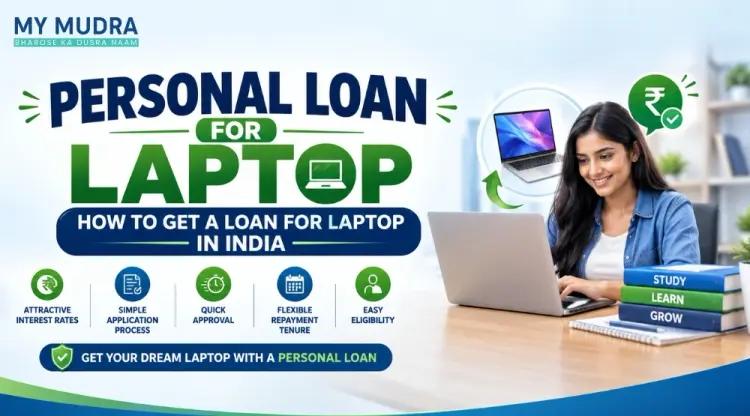
Best Personal Loan for Laptop
Buying a laptop has become an important requirement for students, working professionals, freelancers, entrepreneurs, and other individuals. However, purchasing a high-performance laptop can require a significant upfront payment. A personal loan for laptop can help borrowers arrange the required funds and repay the amount through manageable monthly instalments.
A laptop personal loan is generally an unsecured loan, meaning borrowers may not need to pledge an asset as collateral. Depending on the lender's policies, loan amounts, interest rates, repayment periods, income requirements, and credit score criteria can vary.
What Is a Personal Loan for Laptop?
A personal loan for laptop is a personal financing option that can be used to purchase a laptop without necessarily paying the entire cost from savings. Instead of using a dedicated electronics financing facility, eligible borrowers can apply for a personal loan and use the sanctioned amount towards their laptop purchase.
For example, a student may require a laptop for online classes, while a professional may need a higher-specification device for work, software development, graphic design, or other professional activities. A loan for laptop can provide access to funds without requiring the borrower to wait until they have saved the entire purchase amount.
Since personal loans are usually unsecured, lenders primarily assess factors such as income, employment profile, credit history, repayment capacity, and existing financial obligations.
Features of a Laptop Personal Loan
Before applying, borrowers should understand the common features associated with a laptop personal loan:
1. Unsecured Financing
A personal loan generally does not require collateral. This can make it convenient for borrowers who do not own an asset they want to pledge against the loan.
2. Flexible Loan Amount
The amount available depends on the lender's eligibility criteria and the borrower's financial profile. Borrowers should ideally apply only for the amount required to purchase the laptop and related essential costs.
3. Fixed Repayment Schedule
Personal loans are commonly repaid through Equated Monthly Instalments (EMIs). Each EMI generally includes a principal and interest component.
4. Multiple Repayment Tenures
Lenders may offer different repayment periods. A shorter tenure can result in higher monthly EMIs but may reduce the total interest payable, while a longer tenure can lower the monthly EMI but potentially increase the overall borrowing cost.
5. Digital Application Process
Many lenders offer online application processes. Applicants may be able to submit their basic information and documents digitally and receive a lending decision subject to the lender's verification and approval process.
Benefits of Taking a Loan for Laptop
A loan for laptop can offer several benefits when used responsibly.
Immediate access to funds: Instead of postponing a necessary laptop purchase while saving the full amount, eligible borrowers may be able to finance the purchase through a personal loan.
No collateral requirement: Since personal loans are generally unsecured, borrowers may not have to provide property, gold, or another asset as security.
Manageable repayment: EMI-based repayment allows borrowers to spread the cost over a selected repayment period, subject to lender terms.
Useful for professional requirements: A laptop can be an essential work tool for freelancers, remote employees, designers, developers, consultants, and small business owners. Financing may help them acquire the equipment required for their work.
Potentially quick processing: Digital lending platforms and financial institutions may provide streamlined application processes, although approval and disbursal times vary between lenders.
Personal Loan for Laptop Interest Rates
The interest rate is one of the most important factors when choosing a personal loan for laptop. Personal loan rates are generally influenced by factors such as:
Credit score and credit history
Monthly income
Employment or business profile
Existing loans and other financial obligations
Loan amount
Repayment tenure
Lender's internal credit assessment
A lower advertised interest rate does not necessarily mean that the loan will have the lowest total cost. Borrowers should compare the applicable interest rate, processing fees, documentation charges, prepayment or foreclosure conditions, late-payment charges, and other applicable costs.
For an accurate estimate of the EMI, borrowers can use a personal loan EMI calculator by entering the loan amount, interest rate, and repayment tenure.
Eligibility for a Laptop Personal Loan
Eligibility requirements differ between lenders. Common factors may include:
Minimum age requirement
Regular income
Employment or business stability
Acceptable credit history
Adequate repayment capacity
Valid identity and address documents
Lenders may also have specific minimum income requirements. Meeting the basic eligibility criteria does not guarantee approval because the final decision depends on the lender's credit assessment.
Documents Required
Depending on the lender and applicant profile, documents for a laptop personal loan may include:
Identity proof
Address proof
PAN or other applicable financial identification
Salary slips or income documents
Bank account statements
Employment or business-related documents
Self-employed applicants may be asked to provide additional income or business documentation.
How to Apply for a Personal Loan for Laptop
The application process generally involves the following steps:
Determine the required amount: Calculate the laptop's cost and decide how much financing is actually needed.
Compare lenders: Check interest rates, fees, tenure options, eligibility requirements, and repayment conditions.
Check eligibility: Review the lender's income, credit, age, and employment requirements.
Submit the application: Provide the requested personal, employment, and financial information.
Complete verification: The lender may verify the submitted information and documents.
Review the loan offer: Before accepting, carefully check the sanctioned amount, interest rate, EMI, tenure, fees, and other terms.
Receive the funds: If approved, the loan amount is disbursed according to the lender's process.
Things to Consider Before Taking a Loan for Laptop
Before choosing a loan for laptop, borrowers should consider whether the EMI fits comfortably within their monthly budget. It is also important to avoid borrowing more than necessary.
Compare the total repayment amount rather than looking only at the EMI. A longer tenure may make the monthly payment appear affordable but can increase the overall interest cost. Borrowers should also read the loan agreement carefully to understand fees, late-payment charges, prepayment conditions, and other applicable terms.
Conclusion
A personal loan for laptop can be a convenient financing option when a laptop is needed for education, employment, freelancing, or business purposes. A laptop personal loan may provide unsecured financing, flexible repayment options, and convenient application processes, depending on the lender.
However, borrowers should compare interest rates and charges, assess their repayment capacity, and understand all loan terms before applying. Choosing a loan for laptop based on affordability and total borrowing cost can help ensure that the purchase remains financially manageable.