

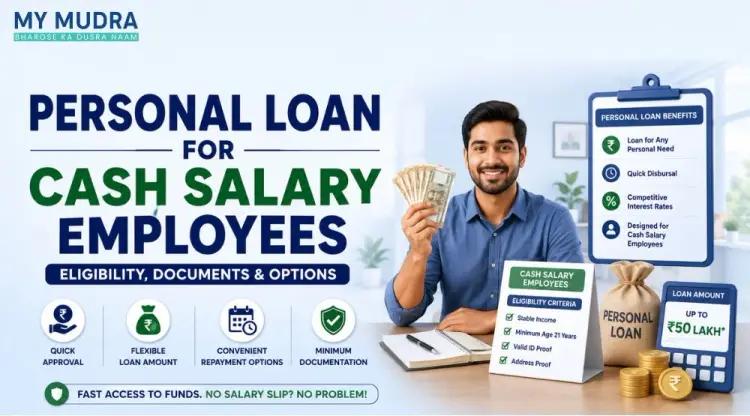
Getting a personal loan can be challenging for individuals who receive their salary in cash instead of through a bank account. Many lenders prefer bank statements and salary slips to verify income. However, cash salary employees may still qualify for financing if they can demonstrate a stable income, employment history, and repayment capacity. Choosing the right personal loan for cash salary employees requires understanding available options, eligibility criteria, documentation, and lender requirements.
Can Cash Salary Employees Get a Personal Loan?
Yes, cash salary employees may be eligible for a personal loan, depending on the lender's policies. Some lenders accept alternative income documents, such as an employer certificate, employment letter, Form 16, or other acceptable proof of earnings. However, lenders may require additional verification when salary payments are not reflected in bank statements.
Before applying for a cash salary personal loan, check whether the lender accepts cash-based income and what documents are needed to verify your repayment ability.
Top 10 Personal Loan Options for Cash Salary Employees
1. Personal Loans from Banks
Banks offer personal loans to eligible salaried individuals based on income, credit history, employment stability, and repayment capacity. Employees receiving cash salaries can contact their bank to confirm whether alternative income documents are accepted. Approval is subject to the bank's verification requirements.
2. Personal Loans from NBFCs
Non-Banking Financial Companies (NBFCs) provide personal loans to eligible borrowers under their respective lending policies. Some may consider different forms of income documentation. Compare interest rates, processing fees, repayment terms, and eligibility requirements before choosing a personal loan for cash salary employees.
3. Loans Through Your Employer
Some employers have arrangements with financial institutions to help employees access credit. Ask your HR or payroll department whether any employee loan facilities are available. An employment certificate or salary confirmation letter may support your application, although acceptance depends on the lender.
4. Personal Loans from Small Finance Banks
Small finance banks offer various lending products to eligible customers. If you receive your salary in cash, contact the bank to understand its income verification policy. Maintaining a relationship with the bank and providing reliable employment records may help with assessment, but approval is not guaranteed.
5. Loans from Digital Lending Platforms
Digital lending platforms allow borrowers to explore loan products and submit applications online. Some platforms work with regulated banks or NBFCs. Before applying for a cash salary personal loan, identify the actual lender, verify its regulatory status, and check whether it accepts cash salary as proof of income.
6. Personal Loans Through Loan Aggregators
Loan aggregators help borrowers compare financial products from multiple lenders. They may simplify the process of identifying lenders whose eligibility criteria match your circumstances. Use an aggregator to compare interest rates, fees, and documentation requirements rather than assuming that every listed lender accepts cash income.
7. Loans Against Fixed Deposits
If you have a fixed deposit with a bank, you may be able to borrow against it, subject to the bank's terms. This option may depend less on conventional salary documentation than an unsecured personal loan. However, the deposit serves as security, and the bank may recover unpaid dues according to the loan agreement.
8. Gold Loans
Gold loans allow eligible borrowers to obtain credit by pledging gold jewellery or other accepted gold assets. Since the loan is secured by gold, income verification requirements may differ from those for unsecured personal loans. Compare the interest rate, valuation, repayment schedule, and consequences of default before applying.
9. Loans from Credit Unions or Cooperative Banks
Eligible members may explore lending facilities offered by cooperative banks or other legitimate member-based financial institutions. Requirements vary by institution, location, membership status, and loan type. Confirm the institution's regulatory status and ask whether cash salary can be accepted as income evidence.
10. Secured Loans from Financial Institutions
Borrowers with eligible assets may explore secured borrowing options offered by regulated financial institutions. These loans require collateral, and the lender may assess both the asset and the applicant's repayment capacity. Understand the risks carefully because failure to repay could result in the pledged asset being taken or sold under applicable terms.
Eligibility Criteria for Cash Salary Personal Loans
Eligibility varies by lender, but applicants may need to meet the following conditions:
Be at least the minimum age specified by the lender.
Have a stable source of income.
Demonstrate consistent employment or business activity, as applicable.
Maintain an acceptable credit history, where required.
Meet the lender's minimum income and repayment-capacity requirements.
Provide valid identity, address, and income-related documents.
Meeting these criteria does not guarantee approval for a personal loan for cash salary employees.
Documents Required for a Personal Loan
Depending on the lender, applicants may be asked to provide:
PAN card and Aadhaar card or other accepted identity documents.
Address proof.
Employee ID card or employment certificate.
Employer-issued salary certificate or salary receipts.
Form 16 or income tax returns, where applicable.
Bank statements, if available.
Other documents requested for income and employment verification.
Never submit false salary slips or fabricated income documents. Inaccurate information can lead to rejection and may have legal consequences.
Tips to Improve Loan Approval Chances
To improve your chances of obtaining a personal loan for cash salary, maintain a good credit history, reduce existing debt, and request an affordable loan amount. Ask your employer for an official salary certificate and keep consistent records of salary payments. Where possible, consider receiving future salary payments through a bank account to establish a verifiable income trail.
Compare the annualised borrowing cost, processing charges, late payment fees, and prepayment conditions before accepting an offer. Avoid lenders that promise guaranteed approval without verification or demand suspicious upfront payments.
Conclusion
Cash salary employees have several potential borrowing routes, including bank loans, NBFC loans, digital lending platforms, and secured credit options. The most suitable choice depends on income verification requirements, credit history, employment stability, and repayment capacity. Before applying for a cash salary personal loan, compare legitimate lenders, confirm their documentation policies, and choose an EMI that fits your monthly budget. Responsible borrowing can help you meet financial needs without placing unnecessary pressure on your finances.